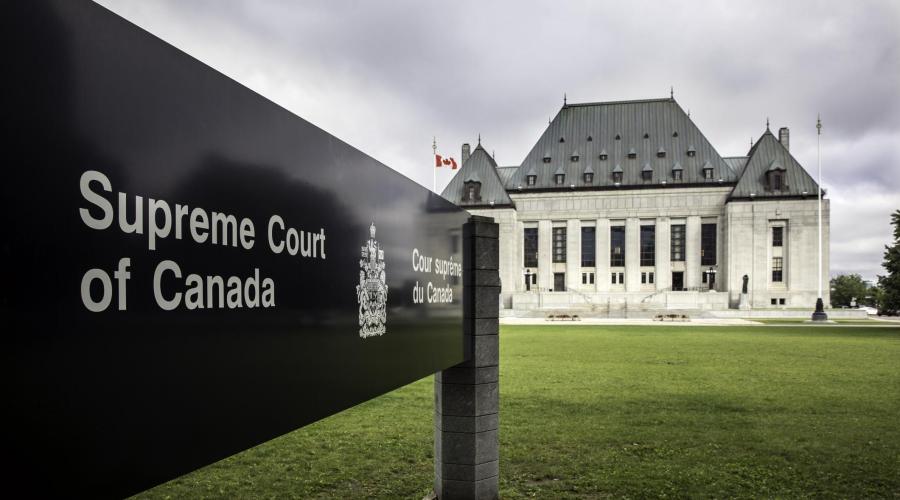
Supreme Court of Canada Upholds Termination For Breach Of Drug And Alcohol Policy

Courts in Canada have long dealt with human rights issues in the context of workplace policies, including drug and alcohol policies. The competing interests are clear. On one hand, workplaces have an interest in promoting and enhancing safety at work through workplace policies. On the other hand, drug and alcohol addiction has been recognized as a prohibited ground under human rights legislation. In the recent decision of Stewart v Elk Valley Coal Corp., 2017 SCC 30, the Supreme Court of Canada had the opportunity to address the human rights issues of a workplace policy requiring disclosure of drug and alcohol dependence or addiction. The Court ruled that termination for violation of the drug and alcohol policy was not discriminatory as the employee could not demonstrate that it was his addiction, as opposed to a breach of the policy, that led to his termination.

Factual Background

The Employer operated a … Continue reading

Ontario Superior Court awards damages for Harassment in Landmark Case

In the realm of employment law, it isn’t at all uncommon for clients to advise that they have suffered harassment at the hands of their employer – but until now, it has been unheard of that a Court would award damages in such circumstances.

Case Study

Peter Merrifeld (Plaintiff) was an employee of the RCMP (Defendant) for 7 years before attending a nomination meeting for the Progressive Conservative Party in 2005. He claims that after this meeting took place, he suffered losses with respect to his reputation and career advancement, in addition to suffering emotional distress and mental suffering, all caused by his superiors in the RCMP. He claims that the losses were a direct result of his intention to run for political office.

After lengthy and complex litigation, Mr. Merrifeld was awarded $100,000 in general damages as a result of his emotional distress and mental suffering, as … Continue reading

What to do if Your Employer Stops Paying You

“My Employer Didn’t Pay Me, Now What?”

I often get calls from prospective clients who have not been paid by their employer for a period of time, sometimes as long as a few months. In some instances, the issue stems from the employer being a start-up company, and in other situations it can involve a medium to large company experiencing cash flow issues.

B.C. Employment Standards Branch

I advise these prospective clients to call the B.C. Employment Standards Branch (ESB) with respect to an unpaid wages complaint. Alternatively, the complaint can be made on the ESB website here. The ESB will assign an investigator to the complaint who can make an order against the company to pay the unpaid wages. Once an order is made by the investigator, the employee can enforce the order. Here, up to 2 months of unpaid wages can be enforced against the personal assets … Continue reading

Reference Check: A Negative but Honest Reference by a Former Employer may not be Actionable

A reference check is typically the last step in the application process that can make or break an employee’s chances of landing a job. For Adam Papp, his former employer’s honest reference cost him a job with the Government of Yukon.

Case Study

Mr. Papp worked for Stokes Economic Consulting, a private company. After a 2 year tenure with the company, it had to let him go for cost-cutting reasons. Mr. Papp was not terminated for just cause, but his interpersonal difficulties with others in the company impacted the decision to let him go. Nonetheless, Ernest Stokes, the company’s president, agreed to be a reference for him as he sought future employment.

In 2014, Mr. Papp was applying for a new position with the Government of Yukon. When Mr. Stokes was consulted for a reference, he shared his positive opinion of Mr. Papp’s technical skills. However, the Government of … Continue reading

Employment Contracts – Valid or Invalid?

All employees have “legal contracts” with their employer, whether they are realize it or not.  Many employees do not have written employment contracts with their employers, while others do. For those employees bound by written employment contracts, there can be several legal obligations and rights that govern the employment relationship contained in an employment contract. One of these obligations is the amount of notice, or pay in lieu of notice (i.e. severance pay) that your employer must provide if your employment is terminated without cause. However, if a termination clause is legally invalid, then an employee’s entitlement to notice or severance pay is determined by common law factors – age, length of service, re-employability, amongst other factors.

Case Study

There are many potential legal arguments as why a termination clause will be invalid.  The law in this area is constantly evolving. In a recent Ontario Court of Appeal caseContinue reading